
OXYZ Health
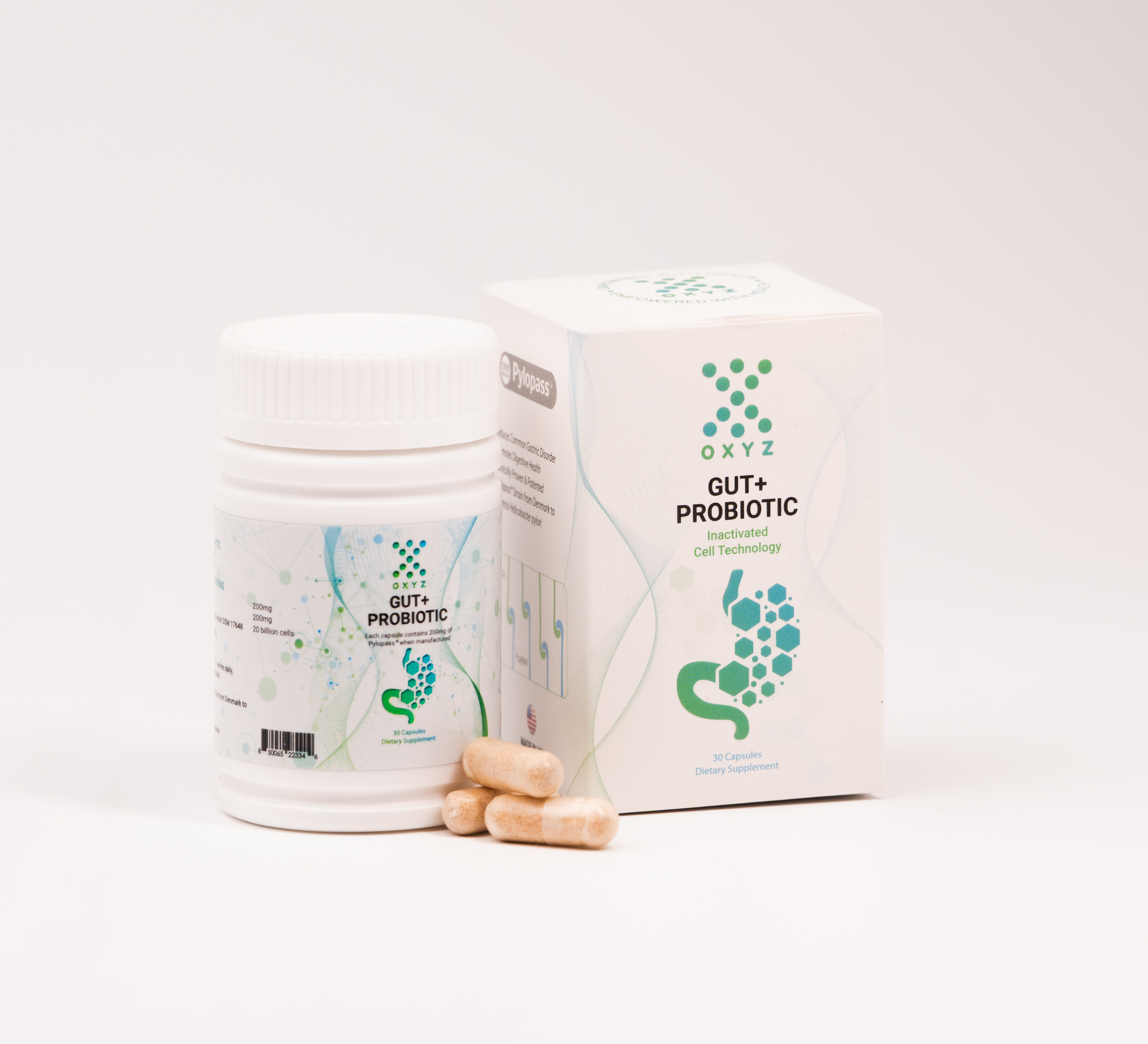
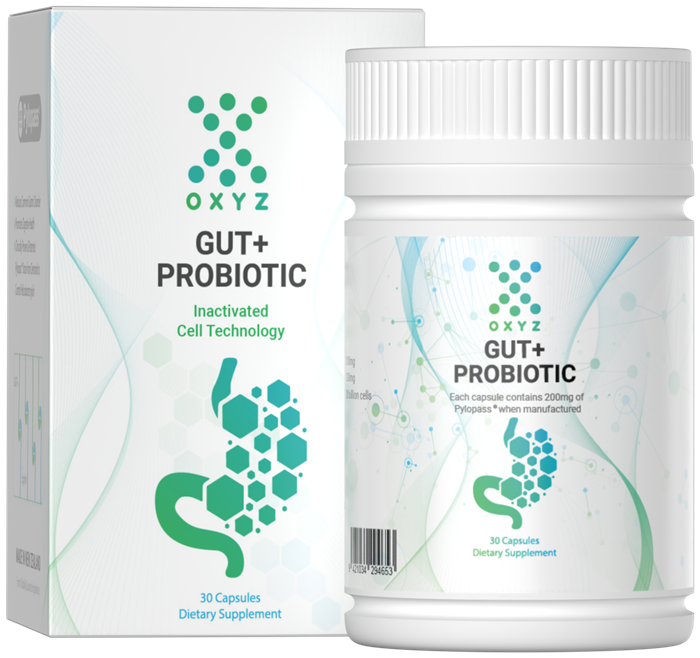
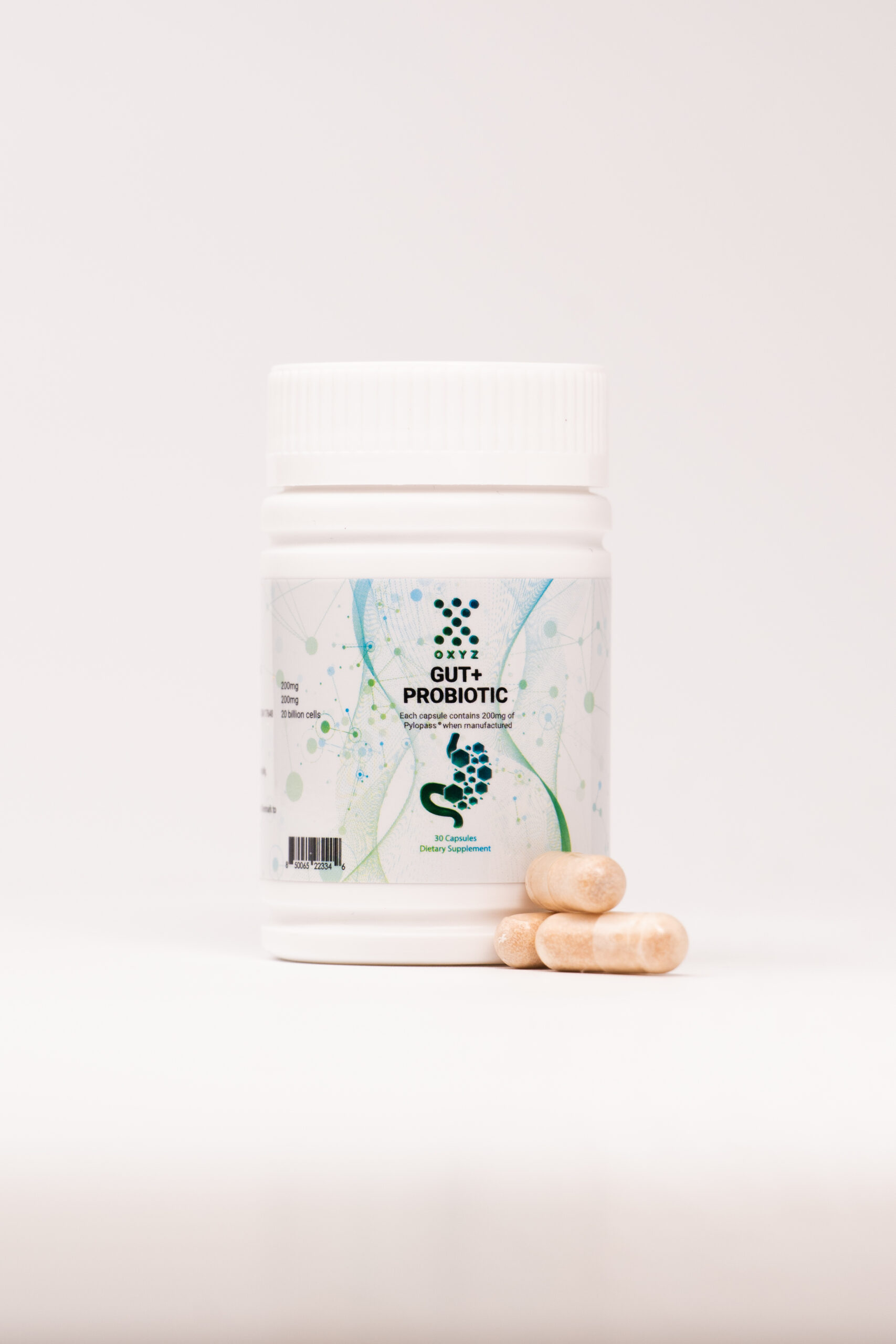
Gut+ Probiotic
At OXYZ
we believe that true wellness starts in the gut. GUT+ Probiotic was developed using a patented Danish strain of Lactobacillus reuteri DSM17648, specifically selected to target and reduce harmful Helicobacter pylori bacteria without disturbing the good bacteria your body needs.
We understand that digestive health affects everything from mood to immunity, which is why GUT+ goes beyond traditional probiotics. It’s safe for kids, pregnant women, and anyone looking for a natural, effective solution to chronic stomach issues.
Whether you’re dealing with acid reflux, bloating, or just want to improve your digestion and well-being, GUT+ helps you regain control of your health — naturally and effectively.

No Side Effects

All Natural

Clinically Proven

Safe for Children & Pregnant Women

Contains Prebiotic & Dietary Fiber

Improve Gastrointestinal Symptoms (bloating, acid reflux, indigestion etc)

Reduce Helicobacter pylori Load

Lower Risks of Gastritis and Peptic Ulcers

Restore Gut Microbiota
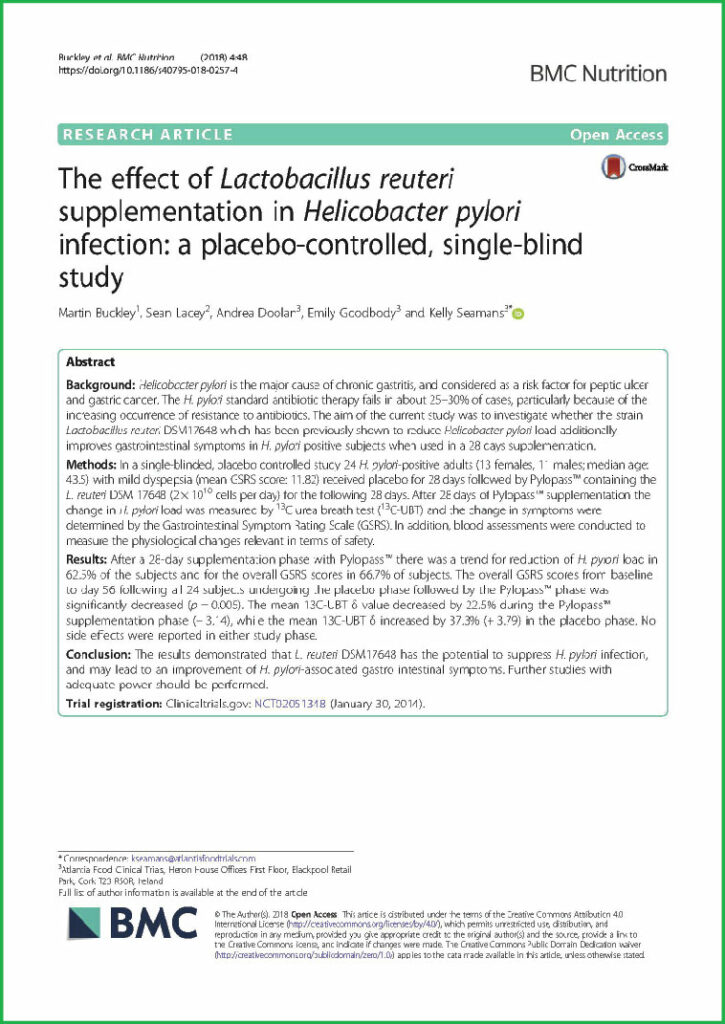
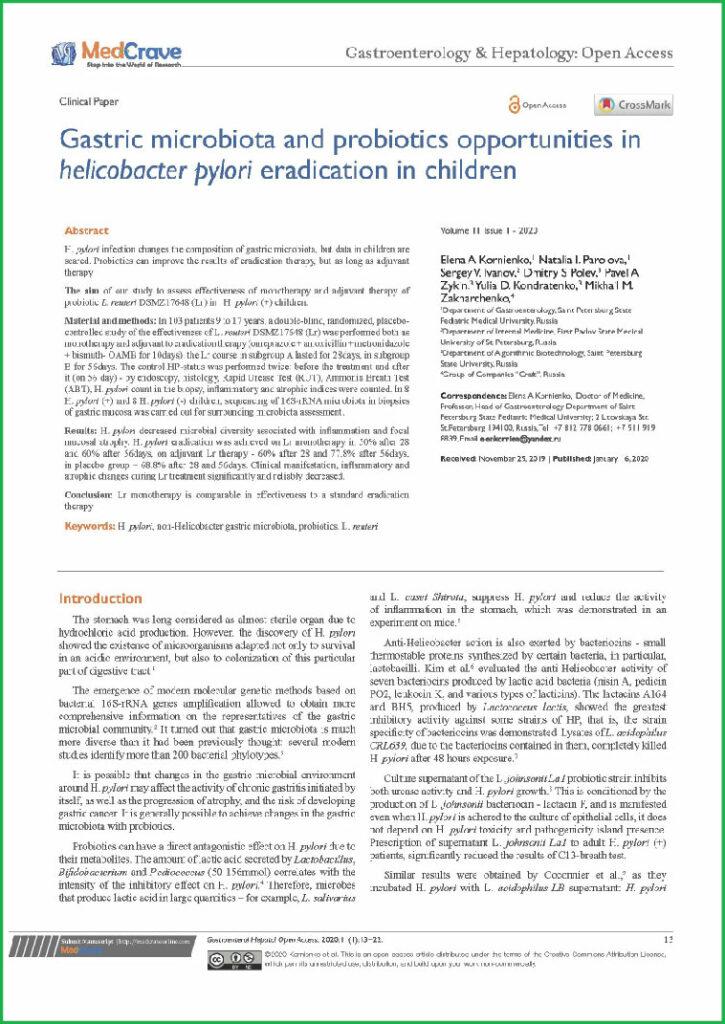
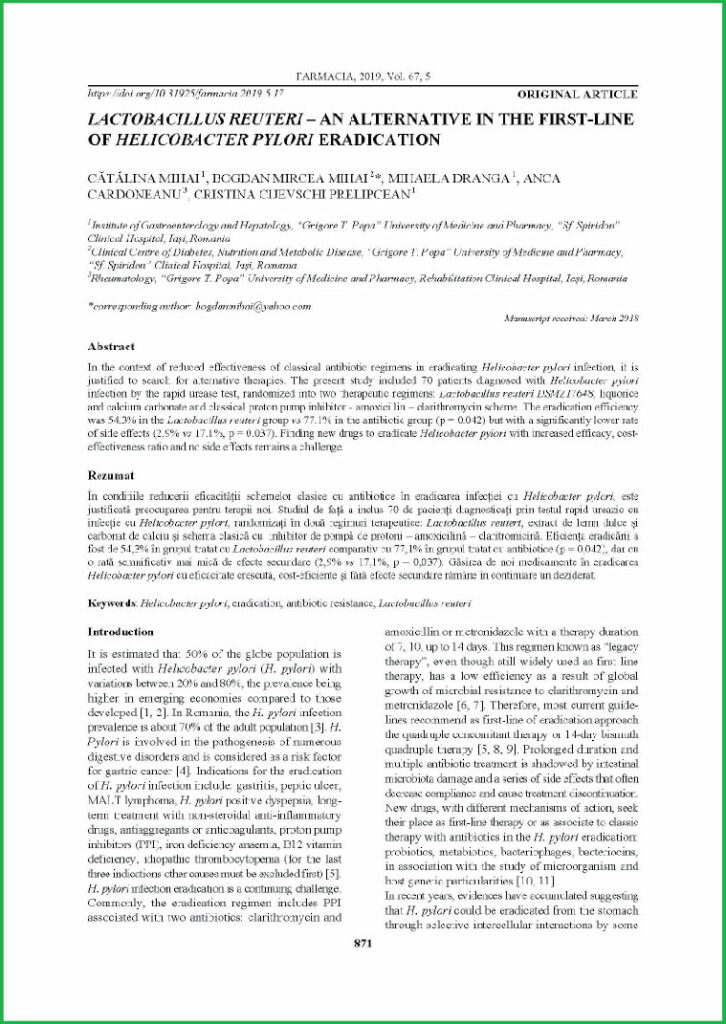
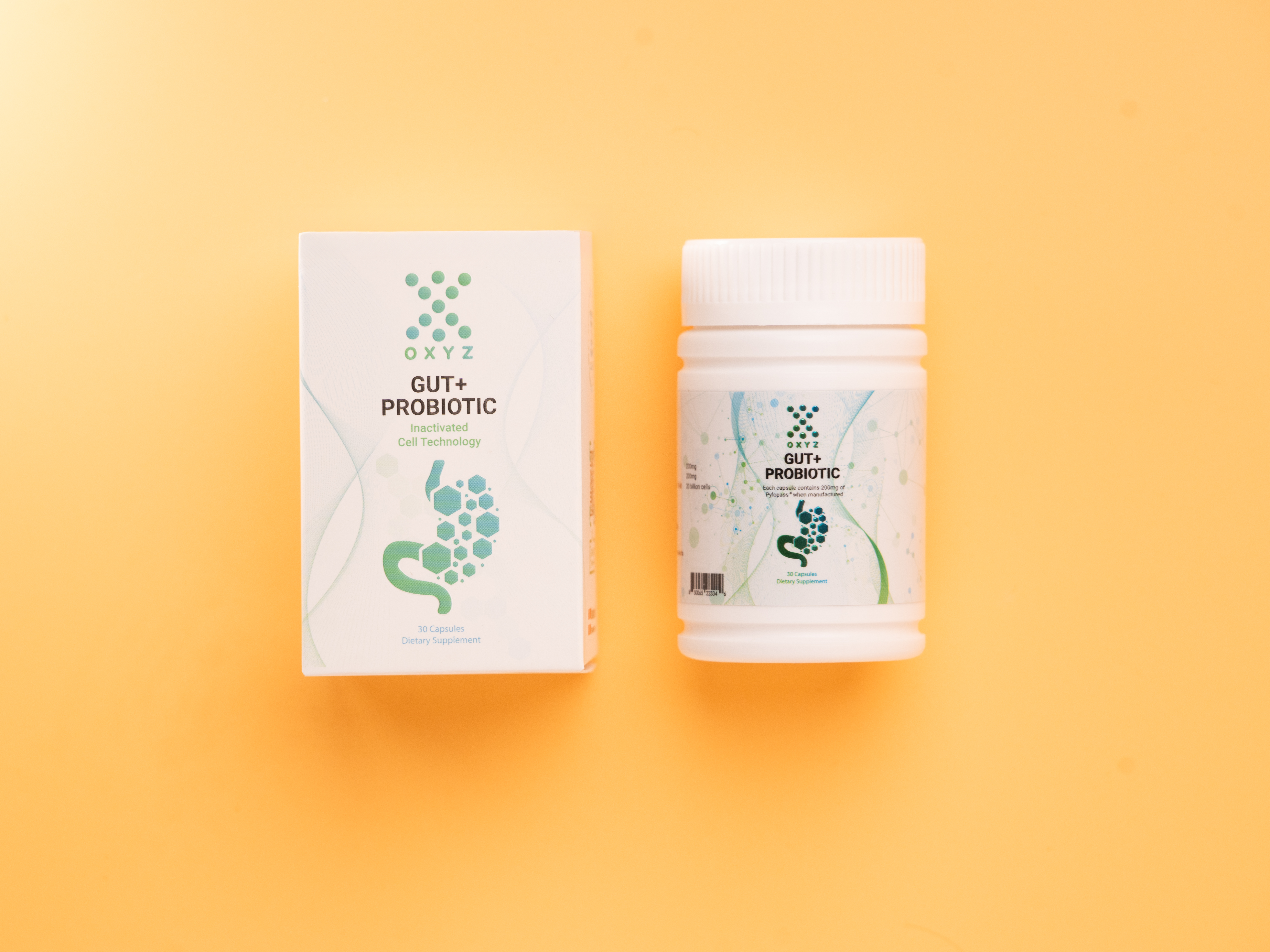
Loaded with 20 billion CFU of Pylopass, the Denmark patented strain of Lactobacillus reuteri, for improving Stomach and Digestive Health. Backed by many clinical studies, Pylopass is a proven strain with safe and natural approach to reduce class 1 carcinogen bacteria – Helicobacter pylori bacterial load and improve gastrointestinal symptoms such as heartburn, acid reflux, bloating, gastritis, stomach discomfort etc. Each serving of GUT+ Probiotic contains:

Stomach Discomfort

Heart burn

Bad Breath- Halitosis

Abdominal Pain

Nausea and Vomiting

Acid Reflux

Indigestion

Constipation

Immunity Issues

Poor Brain Function

Shop Gut+ Probiotic
Gut+ Probiotic & H. pylori: your questions answered
What people ask us most about H. pylori, bloating and Gut+.
Helicobacter pylori (H. pylori) is a bacterium that lives in the stomach lining. It is very common and many people carry it without symptoms for years. When it causes problems, typical signs are bloating, burping, acid reflux, stomach pain and bad breath. A doctor can confirm it with a urea breath test, a stool test or an endoscopy.
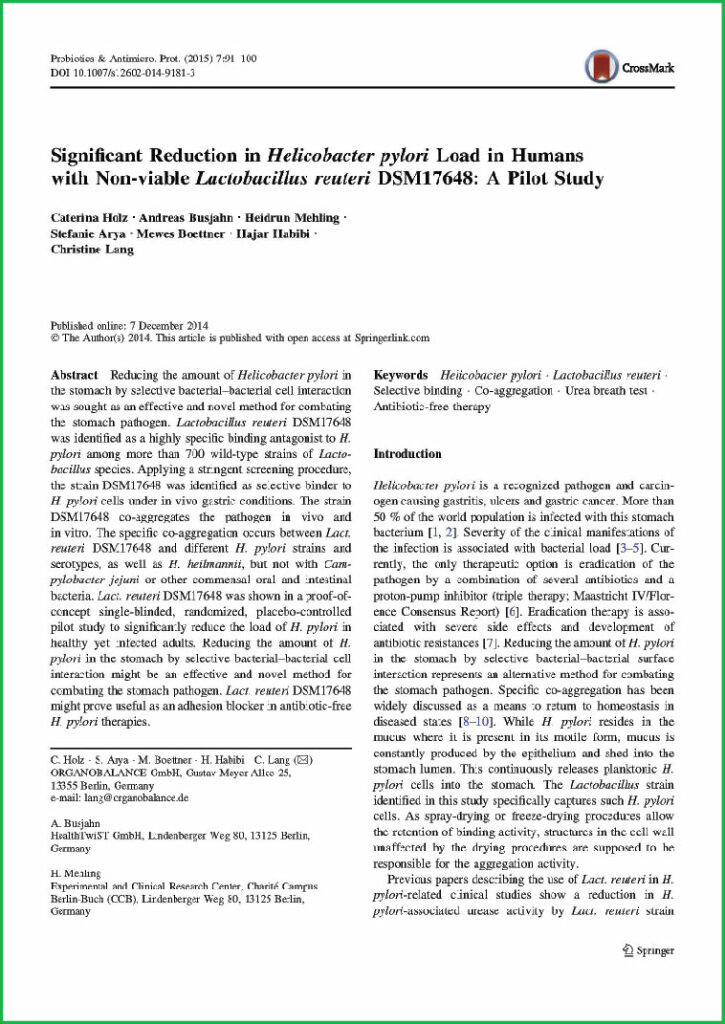
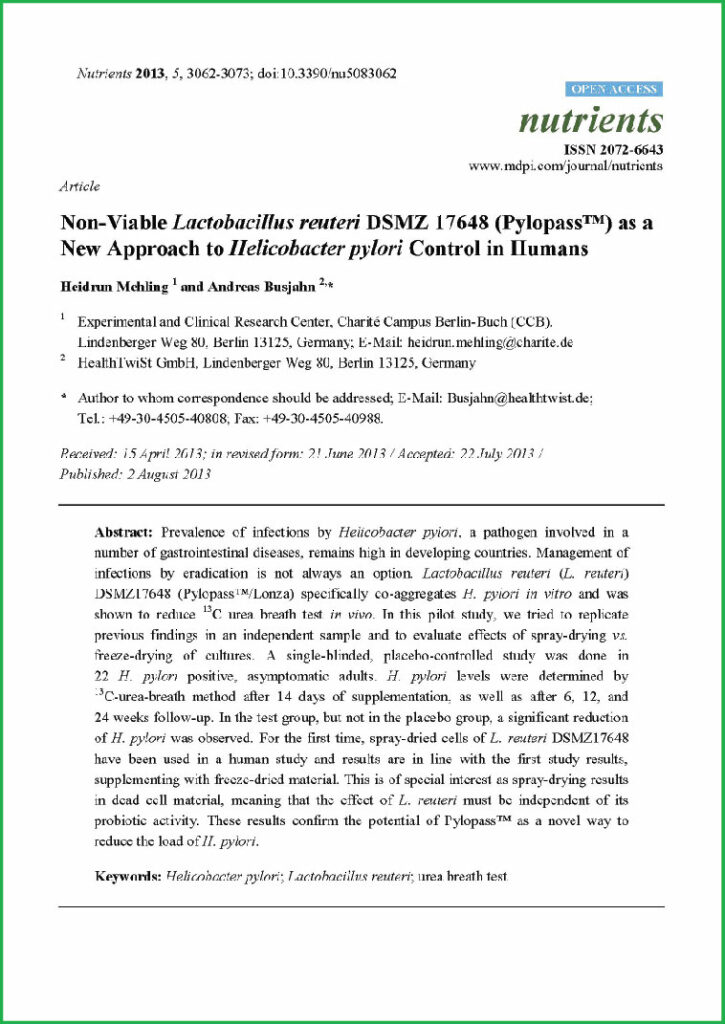
Gut+ contains Pylopass™, a patented strain of Lactobacillus reuteri (DSM17648). It was selected from about 700 Lactobacillus strains for one job: it binds specifically to H. pylori in the stomach so the bacteria can be flushed out naturally, without disturbing your good gut bacteria. In a placebo-controlled study of 22 adults with H. pylori, taking this strain for 14 days significantly reduced H. pylori levels on the urea breath test. Gut+ supports your stomach health; it does not replace treatment prescribed by your doctor.
Yes. Pylopass™ is made with inactivated cell technology, so antibiotics do not weaken it the way they can affect live probiotics. L. reuteri DSM17648 has been studied both on its own and alongside standard triple therapy. Please let your doctor know you are taking it, and always finish any antibiotic course your doctor prescribes.
When bloating, reflux or indigestion are linked to H. pylori, reducing the bacterial load can ease these symptoms. Each capsule also contains prebiotic fibre to feed the good bacteria in your gut. If your symptoms are severe or do not improve, see a doctor.
Take one to two capsules daily in the morning after breakfast. Each serving contains 200 mg of Pylopass™ Lactobacillus reuteri DSM17648 and 200 mg of dietary fibre and prebiotics. There are 30 capsules per box.
For H. pylori, we recommend taking Gut+ for at least 3 months. To maintain stomach and digestive health, most people continue for 6 months or longer. It is suitable for long-term daily use, which is why the 3 and 6-box packs offer the best value.
No fridge needed. Because Pylopass™ uses inactivated cells, it stays stable at room temperature. Store the box below 25°C, away from heat and direct sunlight.
Gut+ uses a gentle, natural probiotic strain and is suitable for children, pregnant women and the elderly. As with any supplement, check with your doctor first if you are pregnant, breastfeeding, giving it to a young child or taking other medication, and stop taking it if you notice any unusual reaction.
Gut+ targets H. pylori in the stomach. Tribiomic is a 3-in-1 drink (postbiotic, probiotic and psyllium fibre) for everyday digestion, bloating after meals and regular bowel movements. Some customers use both.
You can order Gut+ in 1, 3 or 6-box packs from the OXYZ shop. Larger packs lower the price per box. Orders are dispatched within two working days with DHL Express or FedEx to over 80 countries.
Still have a question? Our team is available Monday – Sunday, 9:00 AM – 6:00 PM (GMT+8). Chat on WhatsApp